

An experienced service manager leaves. A technical specialist joins the competition. A young leader sees a brighter future elsewhere.
What really disappears? Not just capacity, but knowledge, customer relationships, experience and the ideas you need to innovate.
In transport, logistics, engineering, automotive, maritime and offshore, business owners know how hard skilled people are to find. Yet in boardrooms we primarily manage costs, margins, productivity and efficiency.
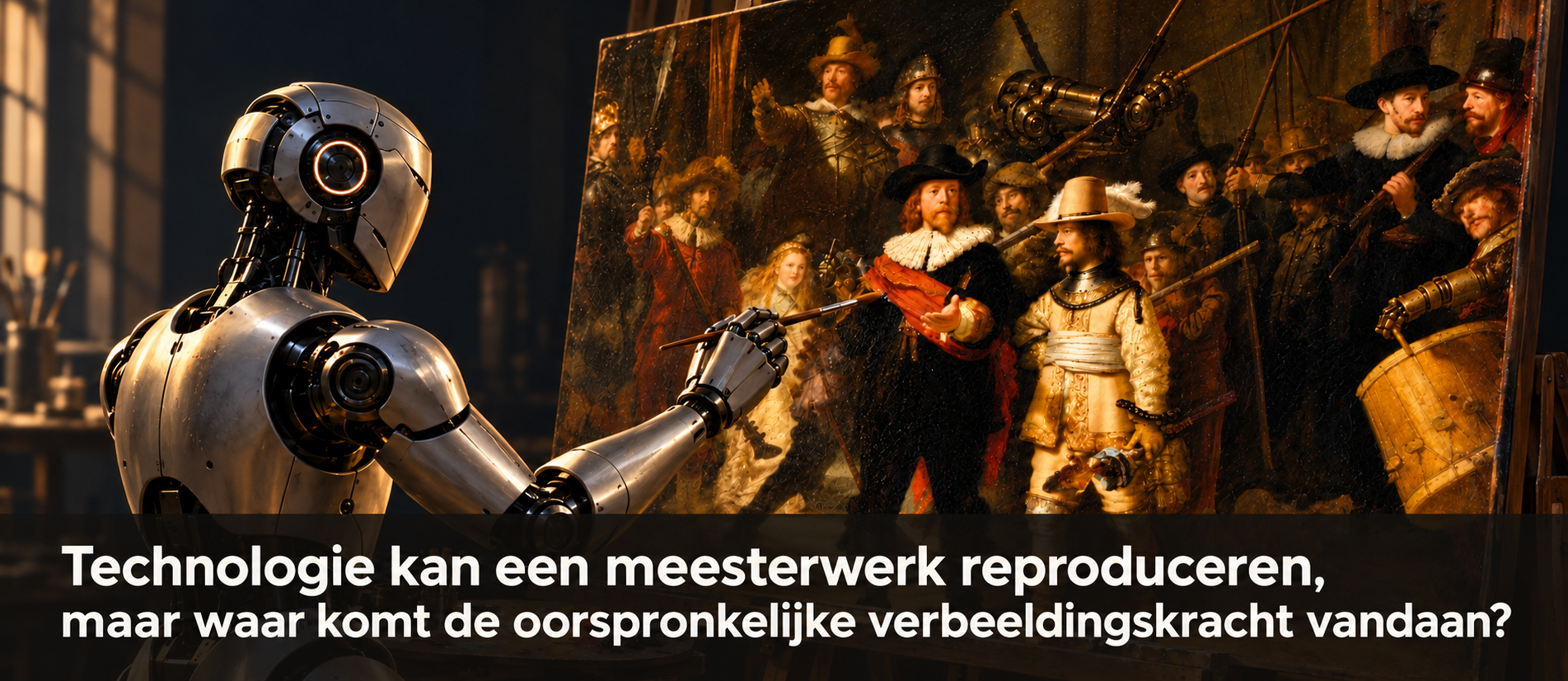
That is where the contest between the Excel Emperor and Rembrandt begins.
China looks towards 2035. What are we looking at?
China works with five-year plans and a strategic direction towards 2035, giving technology, robotics, artificial intelligence and industrial innovation a prominent place. Chinese automotive manufacturers have rapidly become formidable competitors to European brands, not simply through costs but also through speed, innovation and different business models.
A five-year plan guarantees nothing. China also faces uncertainty, overcapacity and failed investments. But it does illustrate what a long-term vision can mean for investment decisions.
In the Netherlands and Belgium, policy uncertainty often leaves entrepreneurs looking for direction. If government does not provide enough clarity, the responsibility to create that direction yourself becomes even greater.
What is your plan for 2030 or 2035? Or are you mainly occupied with next year's budget?
From ASML to Mammoet: leadership with tomorrow in mind
Earlier EiWijzers examined internationally leading Dutch businesses. At ASML, we discussed CEO Christophe Fouquet, geopolitical power, Brainport and long-term investment. Our contribution about Jan Kleijn's departure as COO of Mammoet drew many positive and recognisable reactions. Apparently the importance of experienced leadership, continuity and future prospects strikes a chord.
At Mammoet, led by CEO Joost Goderie, global competition, high-tech operations, specialist knowledge and people development come together. ASML and Mammoet serve different markets, but their executives face the same question: how do you ensure that a world-class company also retains tomorrow's people, knowledge and capacity to innovate?
Financial discipline and operational strength matter. Above all, so does imagination.
In 1994, Marcel and I were in Poland. With four people.
I recognise the tension between entrepreneurship and control from experience. In 1994, shortly after the bankruptcy of DAF Trucks, Marcel Verbeeten and I set out to build DAF's activities in Poland with a team of just four. Marcel was Managing Director; I was responsible for commercial development.
Great ambitions, limited financial resources and a market still to be conquered. We saw opportunities, but not everyone in Eindhoven understood what we were trying to do. We wanted to win customers and develop the market with creativity, courage and entrepreneurial spirit. Eindhoven understandably emphasised financial control, reporting and KPIs after the bankruptcy, perhaps also because of the receivers.
Both were necessary. With limited resources, long days, personal sacrifices and plenty of creativity, we wrote a remarkable chapter together. And an adventure like that creates a bond for life.
That is why Marcel, now an experienced international entrepreneur and executive, remains closely involved in Ei Openers more than thirty years later. People remember not only what they achieved, but whom they achieved it with and why. That was when I learned the meaning behind the phrase: Culture eats strategy for breakfast.
The Excel Emperor knows what yesterday delivered
How much time do we spend in boardrooms explaining last month's numbers? And how much imagining the next five years? Another dashboard, another report, another forecast. When results disappoint, we cut costs, reorganise or pursue efficiencies.
But what if costs are not the real problem? What if you are so busy optimising what exists that you stop considering what your company could become?
Excel is excellent at calculating the returns of your current business model. It cannot tell you when that model reaches its expiry date, let alone which new model to build.
What would Rembrandt have done?
Imagine Rembrandt with a finance director standing beside his easel: “Rembrandt, those shadows are using an awful lot of paint. Your colours also deviate from the benchmark. Could you not simply paint what the market already buys?”
Perhaps his margins would have been better. But would we have known the Rembrandt we admire today, the artist behind The Night Watch?
Rembrandt looked differently, experimented with light and shadow and challenged convention. He was not always financially successful, which makes this comparison even more interesting.
Rembrandt asks: what could be possible?
A successful entrepreneur must answer both questions. But innovation usually starts with the second.
Employee turnover: the quiet threat to innovation
Every experienced employee who leaves takes knowledge, relationships, experience and sometimes ideas with them. Finding, onboarding and training a successor takes time. The colleagues who remain face extra pressure.
That costs money and productivity, but can also weaken your ability to innovate. How can you build tomorrow while constantly filling today's gaps? New arrivals can bring fresh knowledge too, and not every departure is a loss. Yet persistent unwanted turnover undermines continuity.
Younger employees seek development, trust, ownership and credible prospects. Pay and benefits matter, but rarely inspire exceptional performance on their own.
People want to belong. And to build something together.
Our experience with DAF Trucks Polska taught Marcel and me another lesson. Loyalty is not created solely by employment terms or inspiring words. It grows when people face challenges together, make sacrifices, find solutions and learn to rely on one another.
Give people more than a job. Give them a future in which they have a role. Invite them to contribute ideas, take responsibility and feel proud of what you create together. People want to understand not only what they must do tomorrow, but why it matters.
A sense of urgency: become a challenger before you have to
Perhaps the greatest danger to successful businesses is not a lack of creativity but the absence of urgency to use it. When revenues rise, order books are full and results are acceptable, why challenge a successful business model?
Because your competitor will not wait for that model to become obsolete. There is a difference between urgency and panic. Urgency sharpens attention and mobilises people; panic narrows perspective.
When customers leave and margins vanish, the knee-jerk response is often to cut spending, reorganise and postpone investment, precisely the actions that can further weaken renewal.
That is the mindset of a challenger. Do not merely defend your position. Challenge yourself to discover better solutions, different markets and new opportunities, and invite your people to do the same.
What is your company's point on the horizon?
A revenue target is not a vision of the future. A budget is not a strategy. And a strategy that inspires nobody quickly becomes just another boardroom document.
What should your company mean five or ten years from now? Which opportunities do others overlook? What needs to change today, and what role will your people play?
First imagination. Then strategy. Then execution and financial discipline.
A simple experiment for tomorrow
Ask five colleagues where the company will be in five years, and what role each sees for themselves in that future. Five different answers, or uncomfortable silence? You may have not only a strategy problem, but a problem of perspective.
Who will write your next great business adventure with you?
On Thursday 26 November, Ei Openers will visit Terberg Special Vehicles in Benschop. We will meet CEO Rob van Hove, an executive of a leading Dutch family business and a global leader in terminal tractors.
How do you combine international growth, innovation and financial discipline with entrepreneurship, craftsmanship and long-term thinking? Rob is exactly the sort of leader with whom you would want to write a remarkable business story.
My challenge: join us and meet Rob personally!
See Terberg behind the scenes and meet like-minded entrepreneurs and executives.
View the event and register →So who wins: the Excel Emperor or Rembrandt?
An Excel Emperor who only optimises the present risks losing the future to someone willing to imagine something new. But an entrepreneur who combines Rembrandt's imagination with financial discipline stands on much stronger ground.
Are you creative enough to face competition, wherever it comes from? Can you reinvent your company and challenge people so that they not only stay, but actively help build its future?
Competition will not wait for your next budget round. Your best people might not either. Those who only calculate the future risk letting someone else invent it.
EI OPENERS. WE CHALLENGE YOUR THINKING!
We believe resilient businesses are built by people who dare to think, challenge and take responsibility. We connect imagination with strategy, entrepreneurship and leadership development. We help entrepreneurs and management teams translate ambition into action, involve employees and build organisations where talent chooses to stay and grow.