

EiWijzer · Entrepreneurship & geopolitics
Christophe Fouquet and ASML: power is one thing. What will you do with it?
A strong market position creates choices. How do you use that strength without undermining the trust and cooperation on which your future depends?
By Marco de Vrind · Ei Openers · 2 October 2026
Christophe Fouquet leads ASML, a company with an extraordinary position in the semiconductor industry. Its EUV lithography systems, developed in Veldhoven, enable the production of advanced chips. Behind these machines lie decades of research and close cooperation with customers and specialist suppliers.1
That gives ASML considerable bargaining power. When you provide something your customers cannot easily obtain elsewhere, you can set the terms. But how far should you push that advantage? And what happens to the partners you will still need in five or ten years?
For me, that is the real leadership question: how do you use your company's strength without weakening the foundations of that strength?
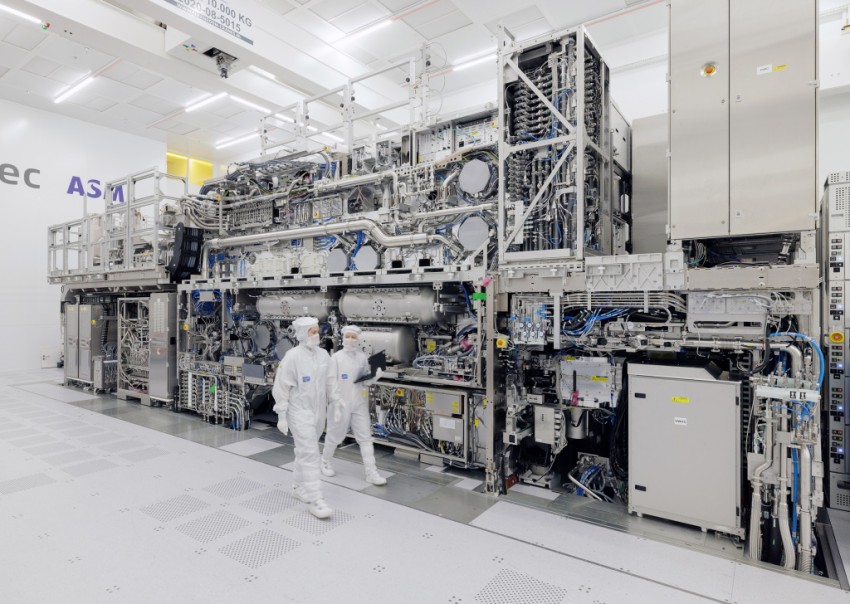
A strong position is built together
ASML explicitly emphasises customer trust and close supplier relationships in its strategy. That makes sense: highly advanced machines depend on partners willing to build expertise, invest in capacity and solve complex problems together.1
Of course, research costs money, shareholders expect a return and a company should be able to charge for the value of its technology. Yet a deal that leaves your supplier unable to invest may become your bottleneck tomorrow. A customer who feels trapped will look harder for an alternative.
Today's best deal can become tomorrow's weakest partnership.
The same principle applies between truck manufacturers and dealers, multinational clients and family-owned suppliers, or a head office and its local branches. During your next negotiation, ask what the other party needs to keep performing. Are your agreements helping that investment happen?
Who sets the boundaries?
ASML's position also has a geopolitical dimension. Its annual report explains how export licences and trade restrictions affect the delivery of equipment. Owning technology does not mean you are free to sell it to anyone.2
Governments must consider security and strategic dependencies. Restrictions may be justified, even when they reduce a company's revenue. But those decisions also affect specialised employees, suppliers who have built capacity and customers who have planned production. Blocking a market may even accelerate local alternatives.
What public interest is being protected? Who carries the cost? What happens five or ten years later? Those who make the rules must face their consequences.
Investment requires a longer horizon
A new factory, technology or skills programme rarely pays for itself within a single budget year. Businesses make commitments under uncertainty. Predictable policy and stable relationships help them assess the risks.
In its Netherlands economic survey, the OECD points to the effect of policy uncertainty on green investments and calls for consistent climate strategy beyond 2030.3 That raises a wider question: how can entrepreneurs make sound investment decisions when the rules keep changing?
Long-term direction does not mean never changing course. New knowledge may require adjustments. But clear goals, honest explanations and sufficient transition time matter. The same applies in business: if a supplier invests for your future growth, what commitments will you make about volumes, cooperation and risk-sharing?
Set a direction, but give people room to act
Politicians should look beyond the next election. Which outcomes should education, infrastructure and energy systems deliver in ten or twenty years? Businesses, employees and citizens then turn those conditions into economic activity.
Consider Brainport, where ASML's growth intersects with housing, transport, education and the interests of other employers. Strong industrial policy must weigh those interests and ask both businesses and public authorities to contribute fairly.
That requires clear rules and practical freedom. Protect safety, fair competition and the environment, then involve the people who must implement the decisions.
How dependent is your own business model?
You cannot wait for policy to become entirely predictable. You can, however, map your dependencies: a dominant customer, a critical supplier, an export permit or a temporary subsidy.
A subsidy may help bring an innovation to market. The real test comes when support ends. Model the impact before the scheme disappears. What happens to margins, cash flow and demand? Which new prices, markets or cost structures will make the business sustainable?
Three questions for your next management meeting
- Who needs room to co-invest? Select a key customer or supplier. Which investment do you expect from them, and do your agreements enable it?
- What does our business model depend on? Quantify the impact of losing one customer, supplier, permit or subsidy.
- Which decision calls for a ten-year horizon? Identify an investment whose return lies beyond next year's budget. How will you stay the course and review progress?
Choose one dependency, appoint an owner and agree on one concrete action this month.
Take everything you can?
ASML shows how power and dependency can coexist. A company may hold a commanding technological position and still depend on customers, suppliers and predictable public decisions.
That is why the question to Christophe Fouquet also matters to every entrepreneur and leader: how much advantage will you take today, and what kind of future are you building with it? Will your decisions make cooperation stronger in five years?
Power gives you options. Responsibility demands a longer view.
Which decision in your business needs a longer horizon?
Ei Openers helps leaders connect strategy, entrepreneurship and practical action.
Start a conversationRead in another language: Nederlands · Polski · More EiWijzers
Sources
- ASML, Annual Report 2025: strategy and stories.
- ASML, 2025 IFRS Annual Report.
- OECD Economic Surveys: Netherlands 2025.
This EiWijzer is an editorial interpretation by Marco de Vrind, Ei Openers.